Exploration pack 2 (for both Wednesday and Friday)
This week I focused on both the experience of Chinese laborers at the European front during World War 1, and on the Revolutionary movements in China following the collapse of the Qing dynasty. In particular I was struck by the unique experience that many Chinese laborers had in France, the odd combinations of political and economic systems propose by Sun Yatsen, and the bizarre but highly entertaining Diary of a Madman.
Chinese laborers on the European front were underpaid, underfed, and experienced varying forms of racism from the European soldiers. However, their experiences were widely varied depending on which army they were interacting with. For example, the British tended to infantilize the Chinese and look on them as children, while at the same time often praising them for their hard work and cleanliness (which, as was remarked by several officers, was far superior to the British). The French were similarly racist, although there were more positive interactions, particularly between Chinese laborers and French women, of which there were several unions after the conclusion of the war. Things were far more violent among other nations, with the Australians and Canadians often attacking the Chinese camps and leading to riots and fights between them.
For their part, the Chinese laborers were racist to the African laborers on the front, and had particularly violent disputes with the Moroccan laborers, whom they called “black devils.” On the whole, the experience seemed to be a microcosm of Imperialism: bringing many different peoples with wildly different beliefs that had previously no knowledge of each other and forcing them to work together. Although there were some positive interactions, i.e. the marriages between French women and Chinese men, the front was characterized by racism, racial and national tension, and exploitation.
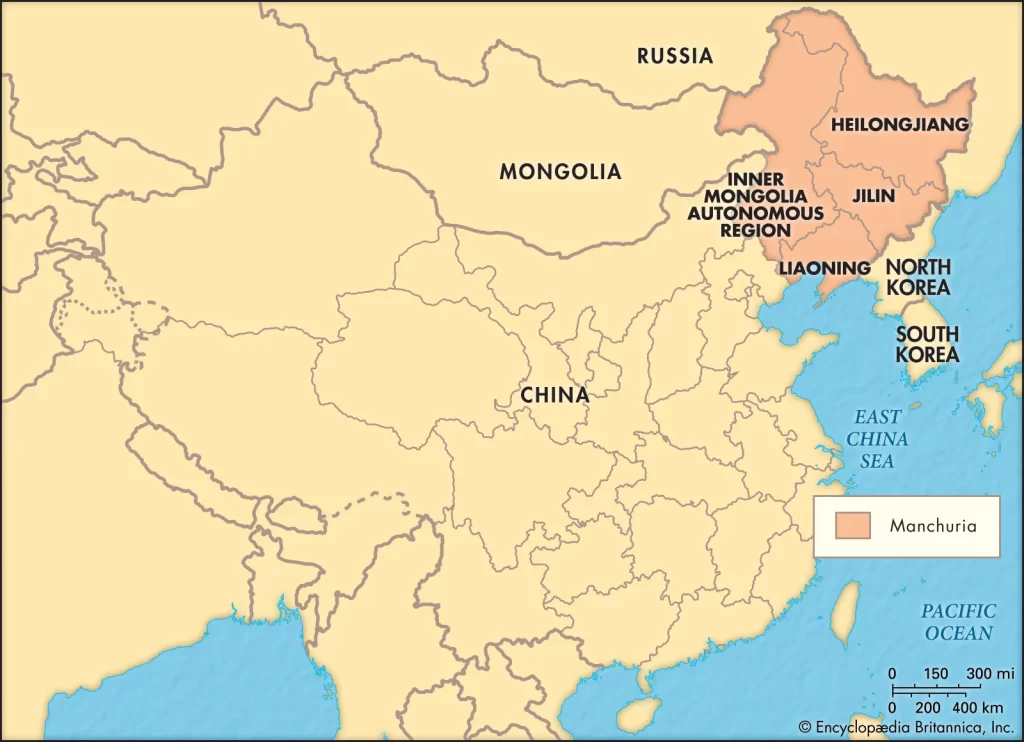
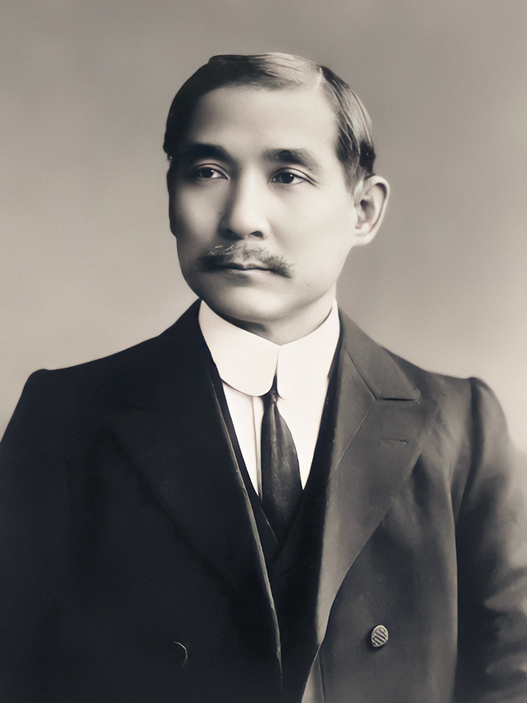
When looking at the writings of Sun Yatsen, I was struck by his attempt to join Western ideology with Chinese ideology. In particular, he proposed a five branch system of democracy: executive, legislative, judicial, civil service, and censorate, which he claimed would be the “most perfect” system as it combined the best aspects of both Western and Chinese politics. He also advocated for nationalism as a way to unite the 400 million odd Han Chinese, claiming that their splintered nature was what had led to both their defeat at the hands of the Manchu and their continued domination by foreign powers. Diary of a Madman, one of the first modern pieces of Chinese literature, reflects the Revolutionary ideas of the time through the lens of a schizophrenic’s diary, using “cannibalism” as a metaphor for a Chinese culture and political system that has existed for thousands of years. It is as entertaining as it is strange, but it also speaks to a wider movement of Chinese people questioning the old order and attempting to reform and revolutionize their country.
Works Consulted:
Lu Xun, “Diary of a madman”. Translated by William A. Lyell. In Diary of a Madman and Other Stories. University of Hawaii Press, Honolulu, 1990.
Sun Yatsen. “The Three People’s Principles” in Sources of Chinese Tradition: From 1600 through the Twentieth Century, Vol. 2, 202-205. Edited by Wm. Th. de Bary and R. Lufrano. Columbia Univ. Press, 2001.
Xu, Guoqi. Strangers on the Western Front: Chinese Workers in the Great War. Cambridge, Mass.: Harvard University Press, 2011